Vision for All: The Swedish Solution to Corneal Damage
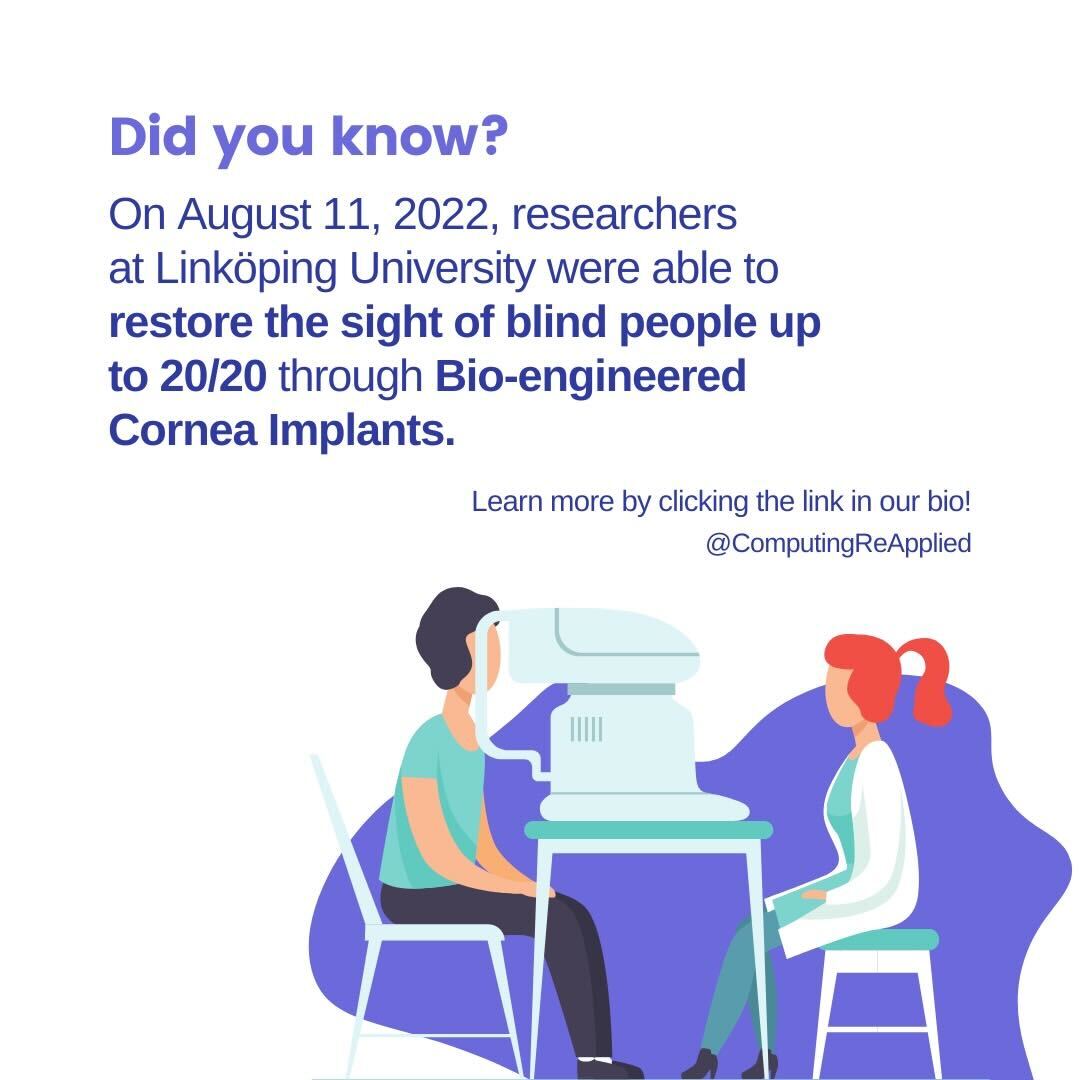
Researchers & entreprenuers at Linköping University were able to restore the sight of blind people up to 20/20 through Bio-Engineered Corena implants
Alex Barson /
Procedures for visual impairment are often complex and expensive with a possibility for difficulties around recovery; yet a recent breakthrough in bioengineering has hopeful implications for those suffering from corneal damage and even blindness.
This breakthrough comes in the form of a collagen protein implant made entirely of pig skin. This may surprise some, but the researchers and entrepreneurs at Linköping University (LiU) in Sweden responsible for these implants assure us that the collagen is, "highly purified and made under strict conditions for human use." [1]. Even further, the CEO of the company that manufactures these implants (LinkoCare Life Sciences AB), Mehrdad Rafat, intends to make them "widely available and affordable, not just [for] the wealthy of the country" [1].
The most exciting portion of this pilot study, however, comes in the form of its success and the possibility for an easily accessible alternative to human-harvested corneal transplants; a procedure with a long recovery time. Results of the study delivered great news in, "restored vision to 20 people with diseased corneas, most of which were blind prior to receiving the implant" [1]. Some study participants with less degenerative corneal damage had their vision restored to 20/20, considered perfect vision.
These implants could be a fantastic solution for those suffering with advanced stage corneal damage from lesser known ailments such as keratoconus, where the cornea becomes thinner over time and actually changes in shape causing visual distortion and eventual blindness [2]. This is a very promising beginning to an age where every person will have access to affordable vision without the need for glasses, contacts, or major invasive surgery.
Source:
[1] Linköping University. "Bioengineered cornea can restore sight to the blind and visually impaired: Bioengineered corneal tissue for minimally invasive vision restoration in advanced keratoconus in two clinical cohorts." ScienceDaily. ScienceDaily, 11 August 2022. <www.sciencedaily.com/releases/2022/08/220811135339.htm>.
[2] "Keratoconus." Mayo Clinic, Mayo Foundation for Medical Education and Research, 9 Mar. 2021,https://www.mayoclinic.org/diseases-conditions/keratoconus/symptoms-causes/syc-20351352.